A walk of cultural learning:
Welcoming rejuvenated Taichung landmarks
Words by Lin Li Juan Translated by Anna Yang
Photos by Reflection Photography
Lin Chih-Chu is known as the "father of Taiwan glue color painting". Lin Chih-Chu Memorial Hall sits on LiuChuan Road, while the Taichung Broadcasting Bureau is near National Taichung First Senior High School, and the Taichung City Office (now open for public exhibitions) is across from the old city hall. The memorial hall renovations have restored its historic architecture, allowing it to once again welcome visitors.
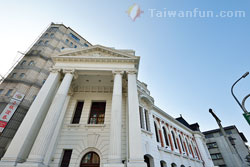 Taichung City Office: Old architecture is revived in spring
The Taichung City Office was built in 1910 and has been used for a variety of purposes. It was originally a public meeting room for the Pi Chun Hydraulic Office of Taichung, before it was used as a site for the Taichung City Council, KMT Headquarters, City Information Center, press room, Social Affairs Bureau, and Bureau of Transportation. When the Transportation Bureau relocated in 2003, the building was restored to its original appearance in a lengthy construction project.
After the big 921 earthquake in 1999, the Taichung Cultural Affairs Bureau initiated a series of actions to protect cultural assets. Following many discussions, the Taichung City Office building was listed as a historic Taichung City landmark and was opened for art and cultural activities. The Cultural Affairs Bureau has decided that its first floor will managed by Rose House Group for a five-year lease period with the main focus being a food and beverage business using ingredients sources from local Taichung farms to create fusion Japanese cuisine dishes. In an additional cooperation between the bureau and the Rose House Group, the second and third floors will become a performance center hosting at least eight performances per year.
The second floor is an open space for supporting contemporary arts, mostly sculpture. The intention is to foster many talented young artists seeking a venue for presenting their creativity. As one goes along to the third floor, a view of striking surrounding structures can be taken in. On March 25, there will be a "soft opening", followed small opening concert on March 27. At this time, the outside wall will feature old photographs selected to reawaken the fond memories of city residents.
Lin Chih-Chu Memorial Hall: Legendary studio of Taiwan's 'father of glue color painting'
Taichung City Government plans to budget NT$2 billion toward environmental changes along the Liuchuan canal banks. The Lin Chih-Chu Memorial Hall, situated next to this waterway, has been open to visitors since July 11, 2015. Its extensive interior showcases a combination of literature and art and serves to promote a passion for the arts. It should not be missed during any iBike ride through Taichung's culture-filled Central District.
Staff at the memorial hall note that Lin Chih-Chu was born in Daya District in 1917. He began studies in Tokyo when he was 12 and was later accepted into Musashino Art University, where he studied drawing. After graduation, he worked at Japan's Jikaku Arts School and gained a deeper education regarding Japanese artistic styles. When he was only 24, his masterpiece "Morning Breeze" was awarded at the Teijin Exhibition in Japan. He then joined the Taipei City Hall exhibition organized by the Taiwan Government and his work "Mother and Son" earned an award at the 5th City Hall Exhibition in 1942. In 1943, another masterpiece, "Good Day", won first place at the 6th City Hall Exhibition. These achievements helped to establish his status within the Taiwanese art world.
Following Japan's defeat in World War 2, Toyo-style painting fell out of fashion, with many artists in related fields having to switch their painting style, or even being forced to change professions. However, Lin insisted on maintaining his original artistic style and changed the Toyo style into glue color painting. The Association of Glue Color Painting was established and Lin organized exhibitions to promote his painting style around Taiwan, helping him earn a reputation as the "father of Taiwan glue color painting".
In 1946, he began teaching at National Taichung University of Education. However, according to school policy at that time, he could only teach sketching, watercolors and chromatology. In an effort to maintain the glue color painting style, he turned his living space into a traditional art studio and selected honor students for tuition-free painting instruction, even covering the cost of their painting materials. Lin's wooden dormitory residence next to Liuchuan canal was provided by the university and he taught in this bamboo enclosed wooden premises after instructing at the university, using it as an art studio for decades.
Today's visitors to the Lin Chih-Chu Memorial Hall can enjoy an unchanged, preserved artistic environment, including a variety of splendid, vivid paintings with many themes. Cultural and creative products are sold in the garden behind the memorial hall, and a creative market and events selling items on consignment take place during weekends, leaving the site with a quiet and peaceful atmosphere on weekdays.
 Taichung Broadcasting Station: A new base for broadcasting cultural events information
Taichung Broadcasting Station was opened on May 11, 1935 with the purpose of boosting local radio audience, media office workers, and disseminating radio programs. At this time, a meeting room here was also created to provide radio technology instruction and host a maintenance council
Today, during the day or evening, visitors can walk into this old building, listed as a historic structure by the Taichung Cultural Affairs Bureau. One attraction is the aesthetics and beauty formed from the variety of lighting effects and creative-looking windows. The 94 windows are displayed with different styles based on the use of room space. Other notable must-see features include the Japanese sentry post standing on the left side of the gate, air-raid shelter behind the moon pond, Japanese stone granite lantern, antique brick-tiled lobby floor, and seven identical white decorative textures on the second-floor balcony.
Taichung City Government actively works to restore the city's old buildings and give them new life. Examples include the two "Cultural Castles" and "Double-Ten Cultural Basin" projects that have used creativity to give new life. Such initiatives have focused on the Taichung Broadcasting Station, Mayor's Mansion, National Taichung First Senior High School, National Taiwan Sports University, Confucius Temple, Wen-yin Hall, and other spots in the old heart of Taichung, as these landmarks are brought back to life under a beautiful cultural spotlight. |

 March 2016

