DISCOVERING
TAIWAN'S WILDLIFE
By
John Ross Translated by Vanessa Wu
Photos by Gerrut Norval and John Ross
A
continent's worth of biodiversity crammed
onto a small island; Taiwan is truly a
naturalist's wonderland. The country's
location at the confluence of tropical
and sub-tropical climate zones, its mix
of continental and maritime species, and
the mountain ranges that soar to almost
4,000 meters, combine to produce an amazing
variety of flora and fauna.
Taiwan,
despite its small land area, is home
to 70 species of mammals, around 500
species of birds (although only about
two-fifths of these are year-round residents),
and over 90 species of reptiles. There
are nearly 2,700 species of saltwater
and freshwater fish, over 30 species
of amphibians, and 18,000 identified
species of insects (including 400 butterfly
species).
Unfortunately,
rapid industrial growth and Taiwan's high
population density have so adversely affected
the environment that few people have any
contact with wildlife. For many city residents,
seeing "wild" animals means a
trip to the zoo.
BACK
FROM THE BRINK
By
the early 1990s Taiwan had justifiably
acquired a reputation as an environmental
black hole. Not only had pollution and
hunting brought ecological ruin to the
former island paradise, but Taiwan's
demand for wild animal products was helping
push many species in Asia towards extinction.
Things
finally came to a head in 1994 when the
United States imposed limited trade sanctions.
Taiwan's government pushed through new
legislation, toughened penalties, and cracked
down on the illegal wildlife trade. Sanctions
were lifted the following year. Since then,
great progress has been made in wildlife
conservation.
Protecting
wildlife means protecting habitats, and
although the government started late
(the first National Park was founded
in 1984) it has managed to set aside
19.5 percent of Taiwan's land area. There
has been a sea change in government and
public awareness of, and interest in,
conservation.
CONSERVATION
SUCCESSES
Many
species such as the Swinhoe and Mikado
pheasants, which were thought to be headed
for extinction, have defied the worst predictions;
their populations are currently low but
relatively stable. The population of Taiwan's
only monkey species, the Formosan Rock
Macaque, has grown steadily.
There
are several wildlife restoration projects
underway, including the Birdwing Butterfly
on Orchid Island and the Formosan Landlocked
Salmon in Shei-pa National Park.
The
most successful project has been with
the Formosan Sika Deer--an endemic lowland
subspecies that favors open grassy plains.
It went extinct in the wild in the late
1960s, but stocks at Taipei Zoo and in
commercial farms were used to establish
a captive breeding facility in Kenting
National Park in 1984. The population
there has grown to about 300, of which
half are now in the wild. Another 500
roam Green Island.
TIPS
FOR SEEING WILDLIFE
Apart
from monkeys and squirrels, the odds
of seeing mammals in the wild are rather
slim. Although birds make a better target,
getting close can be difficult. The fauna
you can most easily find and observe
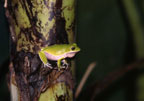
in detail are insects, lizards, and frogs.
And these can be seen very close to home;
in forests, along a creek, or in an orchard.
It is not necessary to head for the hills.
Many people think that most wildlife
lives high in the mountains, but species
richness is inversely related to elevation.
Despite industrialization, urbanization,
and destructive farming methods, there
is still much to see in Taiwan's lowland
areas.
-Wildlife
tends to be more active in early morning
and late evening.
-Night
walks are great fun and very productive.
Find a farm or park; take a good torch,
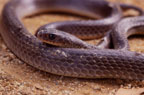
and you'll find frogs and snakes.
-Take your time. Walk slowly and quietly. Stop
regularly, scan the landscape for movement
and listen for sounds such as rustling leaves
or the calls of birds and frogs.
-Find
a comfortable place to sit; wait and watch.
Most animals are very sensitive to movement
and sound. It's best to sit quietly and
allow them to get used to your presence.
Try to blend into the surrounding landscape.
Wear natural colors and clothes that don't
rustle.
-Take
binoculars and insect repellant.
-Take
and use field guides. They're filled with
interesting information, and have great
tips on how to identify and find wildlife.
-Popular
viewing sites have blinds/hiding places.
Please use them to minimize disturbance
to the wildlife.
PLACES TO VISIT
1)
Fushan Botanical Gardens
Located
20 kilometers west of Ilan City, the 1,098-hectare
Fushan Botanical Gardens offers the greatest
diversity of wildlife found in one small
area. The park is open from 9 am to 4 pm,
and the number of visitors allowed in is
limited. It is closed on Tuesdays and during
most of February and March. Entry is free,
but you need to book a place, preferably
a month in advance. This can be done through
the Internet (http://fushan.tfri.gov.tw/a002.htm).
Tel: (03) 922-8900 ext.103
2)
Mount Nanren
Mount
Nanren in Kenting National Park is a unique
lowland forest habitat. As with Fushan,
visitor numbers are restricted. It is closed
on Tuesdays; hours are 8 am-5:30 pm. Visitors
need to book a place by sending their name
and ID number through the Internet or by
phone. Nanren Office: (08) 881-1095. Kenting
National Park Office (08) 886-1321. (http://www.ktnp.gov.tw)
3)
Other places
For
the more adventurous naturalist, two of
the best areas are Mt. Dawu Nature Reserve
in Pingtung County, and the eastern part
of Yushan National Park.
|