
|
Live Life to the fullest with Useful Money-Saving Tips
By Shanzi Chen, translated by Ann Lee
Latelly, whenever I chat with good friends, the topic of money always comes up; we usually start talking about how Taiwan's economy has been going a bit downhill, but the money we spend everyday seems to steadily climb higher with the rising price of, well, most everything. So we wondered—is there a way to enjoy life without always coming up with an empty wallet? If you are like me and could definitely use financial help, here are some money-saving tips and advice to make a habit out of living frugally.
To begin with, if you're serious about saving every penny, then you need to find out where every penny goes. Keep a strict record of your income, your major monthly bills, and daily expenses like food and clothes. Record everything from the Internet bill to the milk tea you bought while waiting at a stoplight. After a few weeks, you may begin to see patterns that will show you exactly what you spend your money on. After becoming conscious of your "weak zone," be it shoes or snacks, try to refrain from purchasing extra items by reminding yourself, "I cannot afford this" or "I cannot buy that." This self-control technique will help keep your consumer urges in check. It will also help you stretch and save your paycheck.
'Saving' through Eco-awareness:
If you want to reduce consumption of expensive resources, lower your power bill,
and help give the environment a break. Here are some tips for you:
Use candles instead of lights/lamps: Turn off the lights, television and computer and light up some candles. This is not only romantic but also homey. Occasionally conserving power can make a big difference in your electricity bill. This method is less effective if you have the AC on, so the prime time to step back a century is in the spring, autumn and winter. Buy plain, inexpensive candles (fancy candles tend to be much more expensive) and put them in tall holders or jars—that way a breeze won't extinguish them. You can also try power-saving light bulbs combined with candles; although they look a bit strange, energy-conserving light bulbs can help lower your electricity bill over time.
Go places where you can enjoy air-conditioning for free: Air conditioners contain solenoids, a type of coil wiring that has proven to be bad for the environment. Also, during Taiwan's scorching summers, when everyone has the AC cranked way up, energy is in high demand and becomes increasingly expensive. A way to relieve some energy-related financial burdens is to go to public places to enjoy the free cool air. Hang out in the library and catch up on the latest best-sellers while escaping the heat—the best part is that it's free. Or try the art museum, science museum, and other public exhibition venues. If you have room in your budget for some fun money, go to cafes, fast food joints, bookstores, department stores or supermarkets. But be careful: with ample benches, flashy displays and cool air, department stores seem like a good choice, but could end up being a cavern of temptation for the shopaholic.
Get outside and enjoy the breeze: Realistically speaking, if you often stay inside an air-conditioned room, you will become sickly pale and probably have an unhealthy lifestyle. So slap on some sunscreen and hit up parks, forests, nature preserves rivers, lakes, and the beach; the breeze in relatively rural areas is often more comfortable than the AC. Also, all of these places are almost always free, so you get to save money and get some exercise.
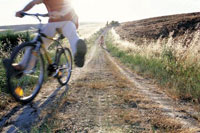
Drive less: As oil and gas prices rise, it directly affects the cost of running our cars and scooters. We city dwellers seem to have this common habit of not wanting to walk or work to get anywhere. There's a Taiwanese saying that goes something like, "Don't stand if you can sit, don't walk if you can ride a scooter, don't ride a scooter if you can drive a car." Of course, all of this leads to higher gas expenses for you. If you have a car, try driving a scooter—although it doesn't help reduce pollution too much, it definitely reduces your gas money. Lately, a Taiwanese film about exploring Taiwan by bicycle has triggered a new interest in pedaling around for transportation. Biking requires little money for maintenance and equipment and contributes to your overall health. If you're going to the 7-11 three blocks away, put those scooter keys down and walk there! Making a habit of riding, walking and conservation will help lower your expenditures.
Getting New Life Outta Old Stuff:
These tips will help you stretch food farther and clean out your junk room
or garage.
An important part of saving money and simplifying your life is somehow getting use out of the things you no longer use and "leftovers". For example, if you're eating Japanese ramen at a restaurant, you might find a large puddle of soup left in the bowl after the noodles are all gone; instead of leaving the soup, which will just be thrown away, take it home and mix it with your own ingredients to get a second meal out of it. If you go to a restaurant with large portions, ask them to wrap half of it up beforehand—that way you're getting at least two meals and are not overeating.
Instead of throwing all the stuff in your garage away, try to reuse it: if you've got a flair for fashion, re-work old clothes into something trendy; make a spice rack out of sturdy cardboard boxes and extra hardware; plant flowers in old, chipped teacups—there are limitless ways you can turn your junk into useful objects. Check out libraries and book stores for DIY books or surf the Internet for craft forums. If you honestly have no use for something that is in relatively good condition, donate it to a charity, a shelter or second-hand shop. For example, give flashy out-of-date clothes and costume jewelry to a high school theatre department or community drama group.
General Tips for Saving Money:
Food:
1.
Cook for yourself—it's economical and healthy.
2.
Never go grocery shopping on an empty stomach—you don't really need
ice cream.
3.
Choose simple, healthy snacks over expensive and luxurious meals.
4.
Bring your own cutlery; try not to use disposable bowls and chopsticks.
Clothing:
1.
Try to buy classic wardrobe pieces that won't be out of style anytime soon.
2. You are your own fashion guru; wear what you have with character and style.
3.
Don't wear only one famous, expensive brand from head to toe.
Living:
1.
Always turn off the lights, fans and electronics when you
leave the room.
2.
Make sure to completely turn off faucets after use.
3.
Conserve water by flushing toilets less; don't flush every
single time.
4.
Don't leave the water running while you brush your teeth or
wash dishes.
5.
Use the same water to wash your vegetables instead of
leaving the tap running.
6.
Keep the AC temperature up; when it is not too hot outside,
use a fan instead.
7.
Don't run the AC nonstop; use a fan to circulate cool air
and turn the AC off.
Transportation:
1. Don't ride your scooter if you can walk or ride your bicycle.
2. Try to use public transportation at least once a week.
There you have it! Before you know it, after following these steps, your life will be less cluttered and you'll feel good about the positive impact you are having on your financial state and the environment. Whenever you are trying to cut back in life, never forget the three R's—reduce, reuse, and recycle.
|

 June 2008
