
|
The Beauty Market: Medical Tourism in Youthful Taichung
Words by Industrial Development & Investment Promotion
Committee of Taichung City
Translated by Naomi Lai
How would you like to enjoy a spa, health examination and sightseeing tour, all in one tourism package? Medical tourism is an emerging high-demand business around the globe. In fact, the medical industry is one of the very few sectors that has still been able to maintain double-digit annual growth in Taiwan, with an increase from US$1.16 billion in 2003 to US$1.69 billion in 2008 in the medical equipment business alone.
Taiwan's medical service quality stands up to international standards, especially in fields like laser eye surgery, cosmeceutical care, and Chinese herbal medications. However, by comparison to countries like Singapore, Thailand, India and Malaysia, which together make up roughly 80% of the world's medical tourism market, Taiwan needs to notch things up a bit. Currently, Taiwan spends most of its resources on only 5% of patients, with insufficient development in markets such as general health care, beauty care and health examinations. According to Taiwan Medical Tourism Development Association statistics, from countries such as the U.S., Japan, Canada, Australia, New Zealand and Singapore, where there's a potential medical tourism market of approximately 9.22 million Chinese people, Taiwan barely succeeds in attracting about 20,000 medical tourists.
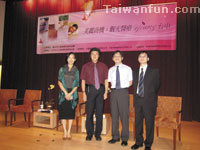
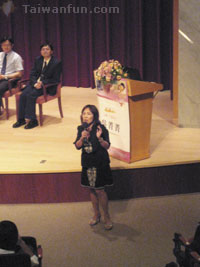
To assist central Taiwan businesses in exploiting the enormous beauty market, the Industrial Development and Investment Promotion Comittee of Taichung City held a "Beauty Market: Medical Tourism, Young Taichung" symposium at the Windsor Hotel on September 17, inviting successful individuals from advanced health centers, cosmeceutical clinics and spa centers, including Chief of Taichung Veteran General Hospital MRI Health Center Dr. Lei-Bin Chang; Chief of Chinese Medical University Hospital Cosmetic Surgery Center Dr. Chao-I Wu; Director of Li Zhi Jia Ren Dermatological Clinic Dr. Li-Chuan Lin; and Dosha Spa CEO Ms. Chin-Chin Wu. This group shared their views and offered in-depth analysis of current medical tourism developments in Taiwan. The event was attended by approximately 200 specialists from the medical field, tourism industry and other impacted business sectors.
As average age climbs in developed nations, notions of health preservation are becoming increasingly prominent. During the symposium, Dr. Lei-Bin Chang explained the importance of regular health examinations, especially emphasizing the usage of advanced technology such as MRI to increase precision in predetermining medical problems, and knowing how to utilize this information to protect one and one's family members from possible health hazards.
Health preservation was not alone on the agenda, as cosmeceutical care is increasingly considered a necessary self-investment for both men and women. According to Dr. Chao-I Wu, today's micro-surgery has the advantages of a near 100% success rate, a decrease in treatment pain, recovery time and medical complications, and boosted self-healing possibilities, which all make it the latest trend in the cosmeceutical world. Director Li-Chuan Lin provided an in-depth analysis of Taiwan's competitiveness in the cosmeceutical industry. In his analysis, "more for the money" is the main propelling force behind developed nations' tourists choosing Asia as their medical tourism destination. For the same treatment, Japan costs 2-2.5 times more than Taiwan, Hong Kong costs 1.5 times more, and the U.S. costs five times more. While Korea's prices are comparable to Taiwan's, it mostly offers only cosmetic surgery services. Taiwan's cosmeceutical services include world-class quality beauty care, cosmeceutical care, cosmetological care and cosmetical surgery. The only thing Taiwan is lacking, he says, is packaging and marketing. Therefore, he is calling on the government to increase efforts toward creating an international marketing platform to serve as a voice for Taiwanese businesses to the world.
Dosha Spa CEO Chin-Chin Wu advocates the use of "aesthetics" as a new economic strength--life as aesthetics, aesthetics as life. The first nation to utilize the economy of aesthetics was Japan, followed by Europeans with their successful marketing of red wine, the Louvre Museum, and their marketing & design shows. The spa industry, according to Ms. Wu, combines the five senses--sight, hearing, smell, taste and touch--with aesthetics to create a new global consumer trend. In the future, this trend can be merged with health examinations and cosmeceutical care for a fuller range of services and greater economic power and profits.
The Taiwanese government has noted the business potential in this market segment and the Executive Yuan has plans to invest NT$10.5 billion in the medical tourism market, focusing on health examinations, cosmeceutical care, dentistry, laser eye surgery and Chinese herbal medication in order to attract Chinese from around the world to Taiwan and to export Taiwan's high-quality medical technology internationally.
In 2009, Taichung was took first place among China's Top Ten Travel-Friendly Cities for its mild climate, convenient transportation, high-quality medical facilities and well-trained medical staff. Taichung is also a center for recreation and shopping in central Taiwan. All of these factors, plus the advantages mentioned above, give the city great potential for developing its medical tourism industry. Cosmeceutical tours, such as health preservation for the elderly, beauty spas, family health education, or anti-aging tours, can provide tourists with health care and recreational opportunities in a single package. As local medical services continue to internationalize, Taichung can anticipate establishing itself as a LOHAS and cultural city, boosting competitiveness through living aesthetics while creating new economic advantages.
|

 October 2009

