Our City Supersized!Our City Supersized
Words by Courtney Donovan Smith
Translated by Angel Pu
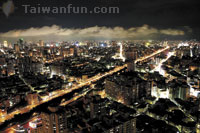
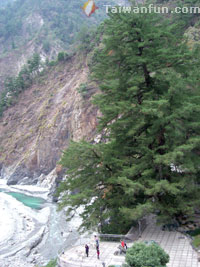
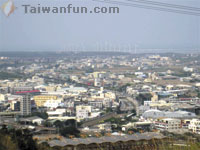
On December 25, 2010, the people of Taichung City and Taichung County received an administrative Christmas present--a new unified city and county government designated a 'special municipality'. This newly minted Taichung City Government will reign over a territory stretching from the Taiwan Strait to over the Central Mountain Range into eastern Taiwan, bordering Yilan County to the north-east and Hualian County to the east. It will encompass the skyscrapers of downtown Taichung and tiny aboriginal villages in the mountains.
This new mega-city will see a huge increase in population, rising from just over one million to over 2.6 million. The city will get more money from the central government, and will have the combined revenues of the city and county to play with. Possibly even more important is how this positions Taichung locally and internationally. The new city government will have many more abilities and opportunities to advance Taichung’s development as the hub of central Taiwan both within Taiwan and throughout the region.
So how will this impact us? Initially, the impact is likely to be small. You'll be using the same facilities as before, working with the same government offices run mostly by the same people. If you live in what was Taichung County your address will change.
Over the next few years, however, big changes are coming. What all these changes will be, what form they will take and where they will lead us still isn’t clear--but some of the coming changes are starting to take form already. Over the course of 2011 the city council and administration will be working on setting city-wide standards and laws and implementing the merger.
For Taichungers, it’s about time! Taipei was raised to Special Municipality status as far back as 1967, followed by Kaohsiung in 1979. This meant that, as far as the central government was concerned, those cities were priorities while Taichung was left to languish as a second-tier city. Tons of money was poured into the development of Taipei and Kaohsiung, leaving our city's citizens feeling cheated--in spite of being at the core of a central Taiwanese population of well over three million that worked, shopped and played in the city.
Some years back, when Taichung City’s population (within the city limits) passed one million, the expectation is that a status change would happen soon--but it wasn't to be. Wrangling on the national level held back progress for agonizing years. Finally, however, the national Legislative Yuan agreed to the upgrade, along with Tainan city and county, Kaohsiung city and county and Taipei County (now to be renamed Xinbei City, or 'New Taipei').
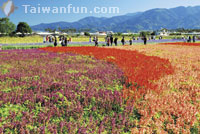
So we know why the city was upgraded to a special municipality, but why the merger with Taichung County? Isn't it odd that the city will now include a lot of farms, aboriginal villages and mountain parks? And it's huge!
True, in some ways it is unusual. However, think of it this way: the vast majority of the population, economy and infrastructure of Taichung county was directly connected to Taichung City. Before, the planning for a project could be run in part by, say, Taiping City, Taichung County and Taichung City. That's messy, confusing and redundant. Everything from taxes to sewage systems had to go through torturous jurisdictional processes. Now, things can be done cheaper (only one department instead of many), faster and with a unified vision. It will also allow for the integration of the sea, land and air transportation systems.
So what happens to all the cities and towns in Taichung County?
Taichung County was broken up into 21 administrative areas. All 21 of those areas will be reborn as Taichung City districts, joining the eight districts Taichung City already had (such as Xitun, Nantun, Central, etc.).
In the short term most city, township and village government offices will remain as they are with simply a change of name. However, over time the government may start to rationalize this large number of offices--but if, when or how remain uncertain until the relevant laws are passed. Expect this to be a long-term process.
What about road names? Will my address change?
For now, residents of the old Taichung City will see no changes of address. Residents of the previous Taichung County will need to change, for example, ‘Fengyuan City, Taichung County’ to ‘Fengyuan District, Taichung City.
Longer term, however, bigger changes may be on the way. There are many roads that run through what were different cities, townships and villages--changing their name in every locale. Obviously this is an odd situation for a unified city.
Worse, most of these locales all used many names in common--in fact there are a total of 650 streets and roads across what was the city and county that are the same. For example, there are 16 'ZhongShan Roads' (named after Dr. Sun Yat-sen) and 12 'ZhongZheng Roads' (named after Chiang Kai-shek). Other common road names include ones named after the 'Three Principles of the People' (SanMin Road), the specific three principles (MinSheng, MinZhu and MinQuan) and other historical references calling for national strength or reclamation of mainland China.
In the short term, this will be solved by noting the district with each road name. So, for example, 'Fengyuan District ZhongShan Road', 'Shalu District ZhongShan Road' and 'Houli District ZhongShan Road'. Longer term there will be some rationalization of the road naming system, but it will take time for the government to implement it.
How does this affect paying bills and government services?
In the short-term, probably not much more than that the address on the bills sent to you may change. For the next few months, most bill-collecting offices of both public and private entities will change no more than they normally would.
One area to keep a close eye on if you are a property or business owner is taxes. When it comes to tax-related areas such as standard housing unit prices, special structure prices, land prices, land values, deductions and methods of verifying deduction standards, the two regions had completely different laws , rates and regulations. Obviously, the new city council will need to tackle this situation.
Will this impact on tourism or leisure activities?
In the short run the impact will likely be mostly psychological, though some changes are already under way. In theory, many leisure activities and hotspots that were out of town are now in town. How much impact that will have is uncertain, and no doubt few of us are likely to think of Xueshan Mountain or Guguan as suddenly ‘in town’--even though that is now technically the case.
It is likely that bus tours, bike paths and similar leisure projects will now start to cross the old boundries. The huge ‘Gateway City’ project is also partly geared towards entertainment and leisure (among other functions) that is underway at the previous location of the Shuinan Airport.
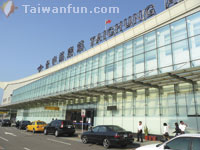
Something else that could have a major impact is the ongoing process of upgrading and expanding the Taichung International Airport (Chingchuankang, Qing Quan Gang) and the growing cross-strait ties. Both have led to a strong increase in money flowing into private leisure and entertainment businesses--leading to these businesses seeking to expand their operations and develop new offerings.
To keep abreast of the latest developments, read the 'Taichung City This Month'
Taichung's 29 districts:
1. Central District
2. North District
3. West District
4. East District
5. South District
6. Beitun District
7. Xitun District
8. Nantun District
9. Dajia District
10. Daan District
11. Qingshui District
12. Wuqi District
13. Longjing District
14. Dadu District
15. Waipu District
16. Shalu District
17. Houli District
18. Shengang District
19. Daya District
20. Wuri District
21. Fengyuan District
22. Tanzi District
23. Taiping District
24. Dali District
25. Wufeng District
26. Dengshi District
27. Shigang District
28. Xinshe District
29. Heping District
|

 January 2011