

 taiwanfun
From our archives, Compass Magazine, Sep. 2001
Cheryl Robbins
Long before the first Chinese settlers arrived on these shores, Taiwan was the exclusive domain of the Aborigines.
Despite this fact, there is little public knowledge of where these earliest settlers themselves came from. As it turns out, Taiwan’s Aborigines–with nine recognized tribes today–are considered part of the Austronesian people group.
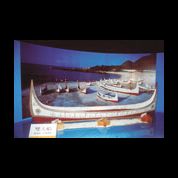
As early as 6,000 years ago, these native people were already excellent canoe builders. Groups of Taiwanese Aborigines set out to explore the seas and migrated first to the Philippines, with some settling as far away as Madagascar and New Zealand. These isolated groups then began to develop different lifestyles and customs.
The newest special exhibit of the National Museum of Natural Science, entitled “The Austronesian Family: Past, Present and Future”, explores the similarities and differences of the native peoples of Taiwan, the Philippines, Indonesia, Malaysia, Polynesia (a group of islands in the Pacific Ocean, including New Zealand and Hawaii), Melanesia (a group of South Pacific islands northeast of Australia) and Micronesia (a small Pacific island group east of the Philippines). These native peoples speak the same type of language and are all referred to as Austronesians.
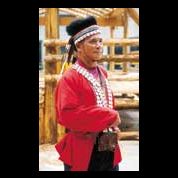
This exhibit includes canoes, masks, carvings, clothing and models of meeting halls and homes of various Austronesian groups. In another special addition, members of the Tsou tribe (from the Alishan area) have built a “kuba” in the courtyard area adjacent to the Chinese Science Hall. In the Tsou language, “kuba” (pronounced koo-ba) refers to a men’s meeting hall. This hall is very important to the tribal culture, as it the place where young males are trained in tribal customs and traditions, and where they learn tribal legends passed on orally from generation to generation.
During weekends, on the first floor of the Global Environment Hall, museum staff and volunteers will be performing dances of the Amis tribe. This tribe is located along the coastal plains of eastern Taiwan. The public will have the chance to join in, to learn first-hand some of the ceremonial dances of this aboriginal tribe. Contact the museum for exact show times.
(The exhibit runs until February 28, 2002 and is located in the 4th Special Exhibition Gallery in the basement of the Chinese Science Hall. The National Museum of Natural Science is located at 1, Kuan Chien Rd., Taichung. Museum hours are Tuesday-Sunday 9am-5pm. Call (04)2322-6940 for more information.)
1, Kuan Chien Rd., Taichung.
Tel: (04)2322-6940
URL: www.nmns.edu.tw
Museum hours are Tuesday-Sunday 9am-5pm.


Comments
0 comments